Your Etsy Shop Got Pulled. Here's How to Build a Home Nobody Can Take Away.
If you're here because your shop disappeared overnight, take a breath.
Then let's get you back on your feet.
I saw a post this week that made my stomach drop.
A spiritual practitioner I follow on TikTok (someone whose work I genuinely respect) posted that some Etsy shops have been removed without warning. Years of reviews. Active orders. Loyal clients. Just gone. And then I started seeing more posts. And more.
Shops that had been running for a decade, suddenly banned. The comment sections were full of people asking "Wait, where did my witch go?" and sellers saying "I don't know where to go from here."
If this happened to you, I want you to know something important: your work is legitimate.
Etsy technically banned metaphysical services back in 2015, but for over a decade, the platform looked the other way. Your shops were surfaced through Etsy's own search tools. Your services were promoted through Etsy's own ad system. And then, seemingly overnight, the door closed.
As one seller, Beatrix of Celestial Craft Spells, said in a Vice article: "On Etsy, witches had a place where we could complete our work without discrimination. Suddenly, and quietly, they have removed us with no real explanations. For some of us, this was our livelihood."
This shook me. Because I've seen this pattern before, and I've been working to help people escape it.
Here's what I know about platform dependency: when you build your livelihood on someone else's property, they get to decide when the party's over. eBay removed metaphysical sellers in 2012. Those sellers moved to Etsy. Now Etsy is enforcing its own version of the same rule.
So let's change the pattern entirely.
Why Your Own Site Changes Everything
Here's the truth about what Etsy gave you: discoverability.
People searching for "love spell" or "protection ritual" could find you without you needing to do any marketing. That's powerful, and losing it hurts.
But here's what Etsy also held: your client relationships, your reviews, your reputation, and your sense of stability. All of it, in one place, controlled by someone else's policy decisions.
Your own website can't be shut down by a marketplace rule change. Nobody can pull your listings. Nobody can decide your gifts aren't welcome anymore.
— ⁘ —
Now, you'll hear people say "unless you're on self-hosted WordPress, you don't really own your site." Let me clarify what that actually means, because this distinction matters:
When you use Squarespace (or later, when you grow beyond Stan Store), you're paying for web hosting and an SSL certificate. That's the same relationship you'd have with Bluehost, SiteGround, or any other hosting provider. Yes, Squarespace could theoretically disappear as a company. But so could any web host. That's a very different risk than what just happened with Etsy.
Etsy didn't disappear. Etsy changed its mind about who's welcome.
Your Squarespace site can't be removed because of a policy change about what kind of work you do. The company would have to completely cease to exist, which is the same risk you'd have with any web hosting provider. That's the difference between platform dependency and a hosting relationship.
I can hear the other question now: "But will people find me?"
Let me tell you what I've learned watching hundreds of self-employed people build their own spaces online.
The Truth About Discoverability (It's Better Than You Think)
Yes, losing Etsy's search traffic is significant. But consider this reality: the people who loved your work already know your name.
They're the ones on TikTok right now commenting "my Etsy witch was banned" and "does anyone know where she went?"
Your clients aren't searching for a witch. They're looking for you.
A personal site gives those people a permanent place to land. And for new clients? Social media is already how most people discover spiritual practitioners. TikTok, Instagram, and word of mouth are driving this entire movement. Etsy's search bar was never the whole picture.
— ⁘ —
Here's how having your own site actually improves your discoverability over time:
You build an email list. This is the single most important asset you can create. Social media algorithms change, platforms rise and fall, but an email list is yours forever. Every client who books with you, every person who finds your TikTok: give them a reason to join your list, and you'll never lose touch with your people again.
You show up on Google. A blog post about your approach to protection rituals, a page explaining how you work: these start ranking in search over time. Etsy was doing this for you. Now you do it for yourself, and the traffic comes directly to your door.
You look trustworthy in a way marketplaces can't provide. Many of your clients are exploring spiritual services for the first time. They're curious and maybe a little cautious. A clean, professional, welcoming website says "this person takes their craft seriously." It builds the kind of trust that a marketplace listing never fully could.
You own your story. On Etsy, you got a shop name, a banner, and some listing descriptions. On your own site, you can show people who you are, what you believe, how you work, and why. For work as personal and intimate as yours, that matters enormously.
Your Quick-Start Guide: Get Your New Home Up This Weekend
I'm recommending Stan Store as your first step because it's fast, it's affordable, and it's built for people who drive traffic from social media (which is probably where most of your clients are finding you already). So even though I’m a Squarespace designer 99% of the time, this is the tool I’m recommending for a quick, efficient, logical solution.
This is a "get back on your feet now" solution. You can always grow into a fuller website later. For now, the goal is simple: have a home by Monday.
Step 1: Sign Up and Choose Your Plan
Head to stan.store and start your free trial. The Creator plan ($29/month) covers everything you need: a digital storefront, booking calendar, email collection, and analytics.
Step 2: Set Up Your Storefront
This is your link-in-bio page and your shop, all in one. Here's what to include:
A warm, clear headline. Something like: "Spiritual guidance rooted in [your tradition]. Book a session or explore my offerings." Let people know immediately what you do and that they're in the right place.
A photo of you (or your workspace, altar, hands at work). People are buying trust and connection. Let them see the human behind the work.
Your offerings, clearly described. For each service, write what happens during the session, how it's delivered, and what the client can expect. Be specific and grounded
Step 3: Set Up Your Services
Stan Store lets you sell digital products, bookings, memberships, and more. For most spiritual practitioners, you'll want:
A booking link for readings, sessions, or consultations (Stan integrates with Calendly)
Digital products if you sell guides, recorded meditations, or written rituals
A membership tier if you offer ongoing support or a subscription model
A note on language:
Since the reason you're here is that Etsy drew a line at "promising outcomes," be thoughtful about how you describe your services on any platform. Focus on the experience and the practice rather than guaranteed results. This protects you legally and honestly represents the sacred nature of your work, which was never about guarantees anyway.
Step 4: Connect Your Social Media
Replace your Instagram and TikTok link-in-bio with your Stan Store link. Done. You now have a storefront that every follower can access directly.
Step 5: Tell Your People
Post on every platform where your clients follow you. Keep it simple and honest:
"My Etsy shop was removed along with many other spiritual practitioners. I've built my own home now, a place that can't be taken away. You can find all my offerings here: [link]. Thank you for following me to the other side of this. 🗝️"
Your clients are already looking for you. Make it easy for them to find you.
Make It Feel Like You: Design Tips That Build Trust
This is close to my heart as a designer, and I think it's especially important for spiritual work. Your online space should feel like a sanctuary, a place your clients feel safe exploring.
Try to be approachable.
I’m not asking you to try to make people like you. That’s something else entirely. Being approachable and accessible allows you to help the people out there looking.
I know the temptation toward deep purples and black backgrounds. But for clients who are curious and maybe a little nervous about booking their first reading or spell, a clean, warm, light space feels infinitely more welcoming. Think about walking into a beautiful, sunlit shop. That openness invites people to stay, browse, and trust. Your magic is just as powerful in the light.
Write like a human.
Skip the overly mystical copy full of "thee" and "thy" and ancient-sounding language (unless that's genuinely your tradition and voice). Most of your clients want to feel like they're talking to a wise, warm person. Be yourself.
Show your face or your hands.
Spiritual work is deeply personal. Even one photo of you at your workspace builds more trust than the most beautifully designed anonymous shop.
The Bigger Picture: You Were Already Outgrowing Etsy
If you're feeling drawn to building something of your own, if this disruption, as painful as it is, sparks something that feels oddly right, pay attention to that.
Many of you built incredible practices inside someone else's house. Your reviews, your reputation, your returning clients: that wasn't Etsy's magic. That was yours. Etsy just provided the address.
Now you get to build a home that actually reflects who you are and how you work. A space where your aesthetic, your voice, your values, and your boundaries are entirely in your hands.
Upgrade!
Need some help?
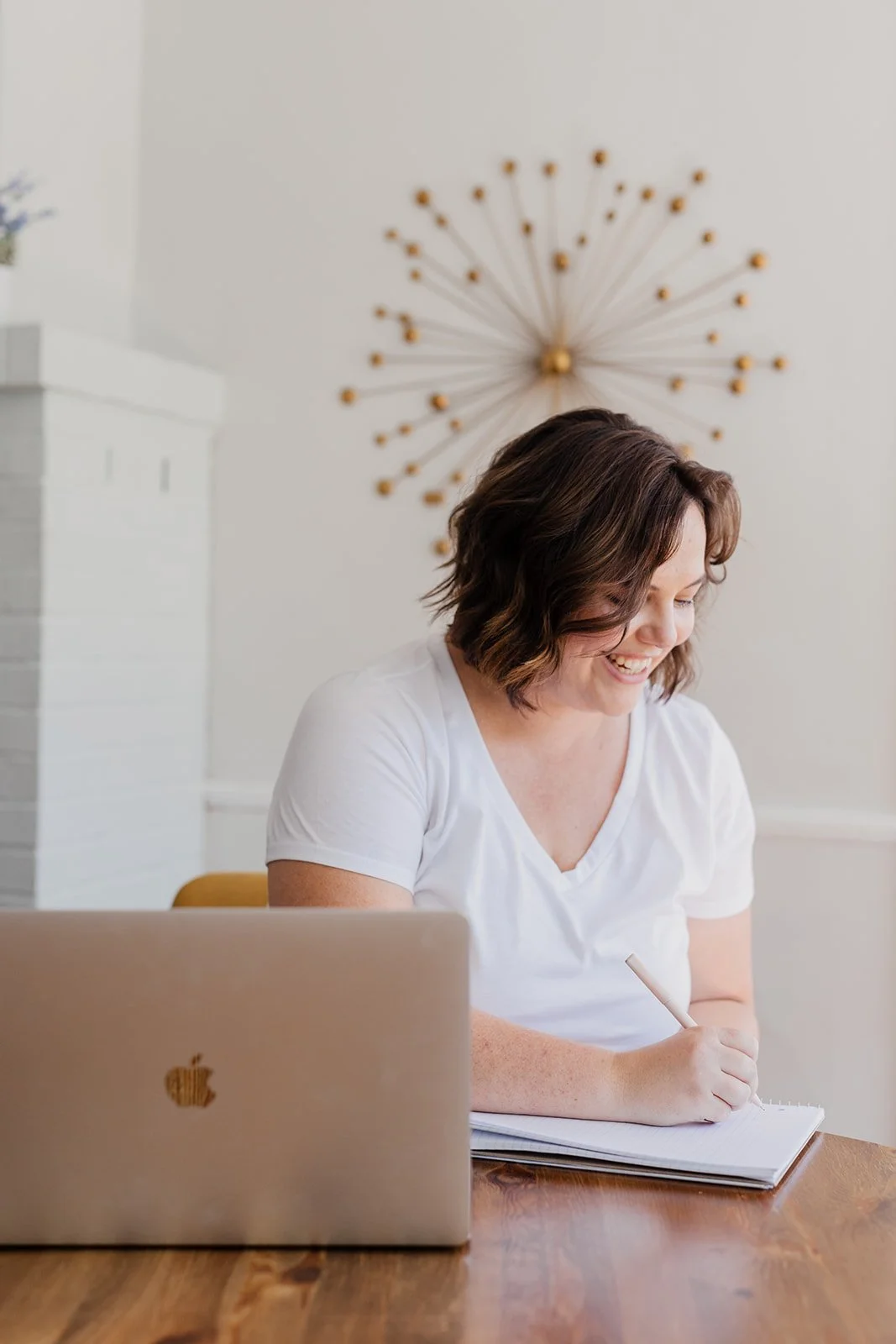
I'm Alison. I'm a web designer and strategist based in the Netherlands, and I help self-employed people build online homes that feel like them. I also happen to be someone who keeps a tarot deck on my desk and believes your business should have room for both strategy and soul.
If you'd rather have someone build your site for you, someone who understands your work, respects your craft, and will make your online space feel as intentional as the services you offer, I'd love to help.
A simple, beautiful website that's yours: I build clean, professional sites on Squarespace for practitioners who want more than a storefront. Your brand, your story, your services, designed to make your clients feel safe and welcome from the first click.
→ Book a free 20-minute call and let's talk about what you need.
You can also find me on TikTok and Instagram, where I'll be sharing more resources for spiritual sellers building their own spaces online.
Your gifts are real. Your work matters. And you deserve a home that honors both.
Sources:
"Etsy Witches Say Spell Casting Is No Longer Welcome on the Platform", Vice, February 6, 2026
"It's a literal witch hunt: Are Etsy witches being removed from the platform?", Daily Dot, February 2, 2026
"A literal witch hunt: Etsy sellers paid to curse evil exes say they're being persecuted", The Business Standard, February 8, 2026
"There's a spell for that: Why 2025 was the year of the Etsy witch", NBC News, December 26, 2025